

9 Leadership Offsite Activities That Build Trust
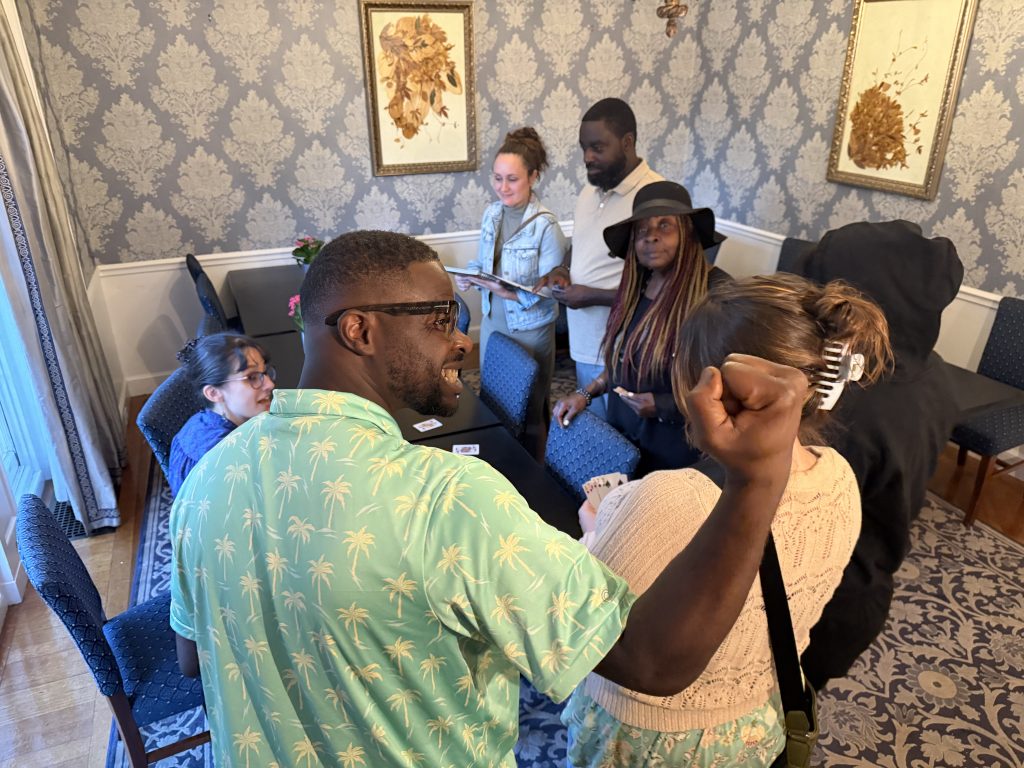
A leadership team can spend six hours reviewing dashboards and still leave without saying the thing that needs to be said. The right leadership offsite activities change that. They create enough distance from deadlines, inboxes, and office politics for people to speak plainly, listen closely, and remember they are on the same case.
The goal is not to force executives into matching T-shirts or make everyone fall backward into a colleague’s arms. A great offsite gives leaders a shared experience that exposes how they communicate, decide, disagree, and recover when the plan goes sideways. Ideally, it also gives them a reason to laugh together.
What leadership offsite activities should actually do
Leaders do not need more passive content. They need a setting where the usual hierarchy loosens just enough for new observations to surface. The CFO might prove to be the clearest problem-solver under pressure. The quietest person in the room may spot the missing clue everyone else overlooked. Those moments matter because they can reshape how a leadership group works once the offsite is over.
Choose activities with a real purpose: better strategic alignment, stronger cross-functional trust, healthier conflict, or a reset after a demanding season. Fun is not a detour from the work. When it is designed well, fun is what gets people participating honestly.
The best format depends on your group. A newly formed leadership team may benefit from an activity that reveals communication styles. A seasoned team facing a major decision may need a strategy-focused exercise. If morale is bruised, start with something social and low-stakes before asking people to tackle hard conversations.
9 leadership offsite activities worth putting on the agenda
1. Solve a murder mystery together
A hosted murder mystery is built for leadership groups because it creates a shared problem with roles, clues, competing theories, and a little healthy suspicion. People have to exchange information, make decisions with incomplete facts, and notice what others are contributing.
It also avoids the familiar team-building trap: activities that feel suspiciously like work with a paper hat on. A mystery gives everyone permission to be playful while still practicing collaboration. Mystery Cafe can host interactive murder mystery experiences for groups that want a polished, participatory event with plenty of laughs and just enough criminal intent.
2. Run a decision-making pressure test
Give the team a realistic business scenario with a timer and a constraint. Perhaps a key customer is threatening to leave, a product launch has gone wrong, or a public response is needed before the day ends. Assign each person different information, then require a recommendation within 30 to 45 minutes.
The value is in the debrief. Who asked questions before offering answers? Who pushed for speed? Who protected the customer, the budget, or the long-term strategy? This activity is especially useful when a team needs to improve how it makes high-stakes decisions.
3. Hold a “working with me” exchange
Ask every leader to share a short, candid guide to working with them. Include what helps them do their best work, what they do under stress, how they prefer to receive feedback, and the behavior that can accidentally shut them down.
Keep it practical, not confessional. A leadership offsite is not group therapy, and nobody should feel pressured to reveal private details. But a few clear truths can prevent months of crossed wires. Follow the exchange by identifying two or three team norms everyone agrees to practice.
4. Build a shared map of the customer journey
Leadership teams often know their own functions brilliantly and the customer experience in fragments. Put a customer journey on the wall, from first awareness through renewal or repeat purchase. Have leaders identify moments of friction, moments of delight, and places where handoffs get murky.
This exercise is not glamorous, but it is revealing. It pulls the group out of departmental turf and into a conversation about the person paying the bill. End by choosing one friction point the team can address within the next quarter.
5. Put on an escape-room-style challenge
An escape-room-style experience turns planning, observation, and communication into an energetic race against the clock. It works well for teams that need a break from conference-room conversation but still want meaningful interaction.
Look for a challenge that requires multiple kinds of thinking. If one person can solve everything alone, the group will not learn much about collaboration. The best games distribute clues and give every participant a reason to speak up.
6. Swap seats in a role-reversal debate
Pick a real strategic issue, then ask leaders to argue from another department’s perspective. The operations leader advocates for marketing. The sales leader argues for finance. The CEO takes the customer-support view.
The exercise can get funny quickly, but it should not become a parody. Ask each person to make the strongest possible case for the role they have been assigned. Teams often leave with more empathy for the trade-offs their colleagues manage every day.
7. Create a future-back headline
Give small groups a date three years ahead and ask them to write the headline they want the company to earn. Then have them describe the decisions, habits, and difficult choices that made that outcome possible.
This is more useful than a vague vision board because it forces specificity. “Company becomes industry favorite” is not a plan. “Company doubles retention after redesigning onboarding and customer support” gives a team something to debate. Compare headlines, find the common themes, and identify where the room sees the future differently.
8. Host a no-slide learning lab
Invite each leader to teach the group one thing in 10 minutes without slides. It could be a negotiation principle, a customer insight, a lesson from a failed project, or even the surprisingly exact science of making great barbecue.
This is a simple way to make expertise visible and help a team see one another beyond job titles. Keep the tone loose, but reserve time for questions. The point is not performance. It is curiosity.
9. End with a commitment courtroom
Close the offsite by putting the team’s best ideas on trial. For each proposed commitment, ask: What problem does this solve? Who owns it? What gets deprioritized? What evidence will show it is working? If no one can defend the commitment, it is probably not ready for the verdict.
This final activity keeps a fun offsite from becoming a pleasant memory with no consequences. Limit the group to a few commitments, name owners, and set a check-in date before anyone heads home.
How to make the offsite feel purposeful, not forced
The activity is only half the story. Set expectations before the event: this is a working session with room for enjoyment, not an endurance test disguised as bonding. Share the purpose, dress guidance, schedule, and participation level early. Surprises are great in a whodunit. They are less charming when someone discovers they were expected to perform improv at 8:00 a.m.
Build in breathing room, too. A packed agenda can make an offsite feel like the same meeting with better snacks. Alternate focused discussion with active experiences, leave time for informal conversation, and avoid scheduling the most vulnerable conversation immediately after cocktails.
Most of all, make psychological safety part of the design. Leaders should be able to disagree without being labeled difficult, ask for context without looking uninformed, and admit uncertainty without losing status. No puzzle, game, or retreat venue can manufacture that trust by itself. But a well-chosen shared experience can make it easier for the real conversation to begin.
When you are choosing among leadership offsite activities, pick the one your group will still be talking about when the agenda is forgotten. A team that can laugh together, investigate together, and tell the truth about what is not working has already gathered some very useful evidence.

