
How to Choose Party Entertainment Guests Love

A party can have a beautiful room, a generous bar, and food nobody stops talking about. But if the entertainment lands with a thud, guests will remember the awkward pauses more than the appetizers. Knowing how to choose party entertainment means choosing the kind of fun that gives people a reason to connect, laugh, and stay in the room a little longer.
The best choice is rarely the flashiest act on a booking page. It is the one that fits the people, the purpose, and the practical reality of your event. Consider this your case file for finding entertainment that gets guests involved without making the planning process a crime scene.
Start With the Feeling You Want Guests to Take Home
Before comparing performers, games, or event packages, decide what success looks like. Are you hosting a corporate celebration where coworkers need an easy way to loosen up? Planning a birthday where the guest of honor wants something more memorable than dinner and drinks? Bringing together family members who do not all know one another?
Entertainment is not just a slot in the schedule. It sets the social temperature. A live band may create energy and leave plenty of room for conversation. A comedian can work well for a crowd that enjoys a shared show, but may not be right for a group that wants to mingle. An interactive mystery, trivia experience, or escape-room-style challenge gives guests a common mission, which is especially useful when the room is full of people meeting for the first time.
Ask yourself one useful question: do we want guests to watch, participate, or do a little of both? There is no wrong answer, but there is a mismatch if your team expects hands-on fun and receives a performance that asks them to stay seated all night.
Match the Entertainment to Your Guest List
A great idea for one group can be a spectacular misfire for another. Start with the size, age range, relationships, and comfort level of the people attending.
Smaller groups can often handle more personalized experiences, such as a hosted mystery where each guest receives clues or a private class led by an expert. Larger groups need formats with clear instructions, strong hosting, and enough structure to prevent a few outgoing guests from taking over all the fun.
For a mixed crowd, choose entertainment with different ways to engage. Not everyone wants to perform, solve puzzles at top speed, or become the center of attention. The strongest interactive events let bold personalities jump in while giving quieter guests meaningful roles, smaller-team conversations, or the freedom to participate from the sidelines.
Consider the group’s existing chemistry
A tight-knit friend group may love costume prompts, inside jokes, and competitive challenges. A newly formed department may need a gentler on-ramp: shared laughs, low-stakes participation, and a host who can make introductions feel natural instead of forced.
Corporate planners should be particularly careful with humor. The aim is to create a story people can share at work the next day, not material for an uncomfortable HR follow-up. Look for entertainment that is adaptable, professional, and clear about its content and audience fit.
Let the Venue Shape the Plan, Not Limit It
The room is part of the cast. A high-energy band needs space, sound support, and guests who are ready for volume. A roaming performer needs room to move. A visual act may need lighting control and sight lines. A dinner theater experience needs enough seating for guests to eat, watch, and participate comfortably.
Ask venues direct questions before you book. What are the noise limits? Is there a stage or sound system? When can entertainment load in? Is there reliable Wi-Fi if part of the program is virtual or app-based? Can tables be arranged for teams? These details are less glamorous than selecting a theme, but they are what keep the evening from falling apart in the third act.
If your venue is unusual, entertainment can become the solution rather than the problem. A restaurant private room, office, hotel ballroom, rented house, or even a bus can become more memorable with an experience designed for its setting. A flexible host-led format often travels better than a production that depends on a perfect stage.
Set a Budget That Includes the Whole Experience
Entertainment pricing is more than the advertised fee. The real number may include travel, setup time, equipment, venue requirements, gratuity, costumes, printed materials, staffing, or minimum guest counts. Get the full picture before you fall in love with an idea.
That does not mean the least expensive option is the safest choice. A playlist may cost almost nothing, but it will not automatically create connection among 40 people who arrived as strangers. Meanwhile, a professionally hosted interactive event can reduce the pressure on the organizer, keep the schedule moving, and give guests a built-in reason to engage.
Think in terms of value per shared moment. If an activity gives the whole room stories, laughter, and photos worth revisiting, it may carry more weight than an expensive decoration guests barely notice. The goal is not to spend more. It is to spend on the part of the party that people actually experience together.
Choose the Right Level of Participation
Participation is where a party becomes personal, but more is not always better. Some guests love being handed a microphone. Others would rather disappear behind the dessert table than improvise in front of colleagues.
Low-participation entertainment, such as musicians, caricature artists, or a featured performance, works well when guests want freedom to circulate. Medium-participation options, including trivia, casino-style games, or guided tastings, give people something to do without putting anyone on the spot. High-participation formats, such as murder mysteries, team challenges, and role-playing games, are ideal when the event itself is meant to be the main attraction.
When you are unsure, choose structured participation. Clear rules, a welcoming host, and team-based activity make it easier for guests to say yes. People do not need to be natural performers to enjoy playing detective for an evening. They just need permission to be a little silly.
Vet the Host, Not Just the Concept
Two companies can offer what appears to be the same activity and deliver very different nights. The difference is often the host. A skilled facilitator reads the room, explains the game without a ten-minute instruction manual, manages timing, and brings quieter guests into the action without dragging them into the spotlight.
When evaluating providers, ask how they customize the experience, what they need from the venue, and how they handle groups with different energy levels. Find out who will actually host the event. Ask whether the program is designed for your group size and whether they have a backup plan for technical issues, weather, or a late start.
Reviews can help, but look for specifics. Comments about organization, responsiveness, guest participation, and an entertaining host tell you more than a generic five-star rating. Experience matters most when the plan needs to flex in real time.
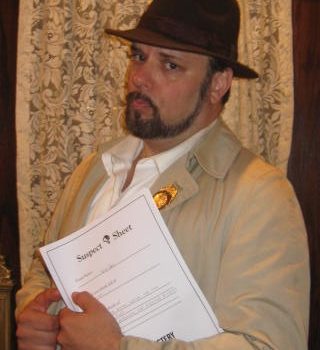
Mystery Cafe, for example, has built interactive mysteries around that very balancing act: giving a group enough structure to play together while leaving room for spontaneous laughter and suspiciously enthusiastic alibis.
Build Entertainment Into the Event Timeline
Even terrific entertainment can lose momentum if it starts too early, too late, or while guests are hungry. For most social events, allow time for arrivals and conversation before asking everyone to focus. At a dinner event, coordinate courses and performance beats so nobody has to choose between solving a clue and carrying a plate.
Be realistic about attention spans. A short, high-energy experience can be more effective than three hours of loosely organized activity. If you want a longer program, create natural shifts: a welcome, a first round of play, a meal or break, then a final reveal or awards moment.
Do not forget the ending. A reveal, winning team, final toast, or group photo gives the event a satisfying finish. Without one, guests may drift out wondering whether the party was still happening.
Make the Booking Decision With Confidence
The final choice should answer four simple questions. Does it fit our guests? Does it work in our space? Does it support the reason we are gathering? Can the provider make it easy on the person planning the event?
If the answer is yes, you have more than party entertainment. You have a shared experience that gives everyone something to talk about before the night is even over. Pick the format that invites your guests into the story, then let the good times get away with murder.