
12 Fun Alternatives to Office Parties for Teams

The same hotel ballroom, lukewarm appetizers, and forced small talk have claimed enough victims. Fun alternatives to office parties give teams something better than a calendar obligation: a shared story, a reason to laugh, and a chance to see coworkers outside their usual meeting-face mode.
The best choice depends on your team. A close-knit group may want big personalities and healthy competition, while a mixed-department crowd may prefer low-pressure participation. The goal is not to make everyone perform. It is to create an experience people can actually talk about afterward.
Why the Standard Office Party Can Miss the Mark
Traditional parties are easy to picture because they are easy to plan: reserve a room, order food, add a drink ticket, and hope conversation happens. But passive events can split a team into the same familiar clusters. The sales crew talks to sales, leadership talks to leadership, and the new hire quietly checks the clock.
A stronger group event gives people a common mission. It might be solving a crime, building something ridiculous, learning a new skill, or chasing clues around town. Structure is not the enemy of fun. Done well, it removes the awkward “what do we do now?” gap and makes it easier for everyone to join in.
12 Fun Alternatives to Office Parties
1. Host a Murder Mystery Dinner
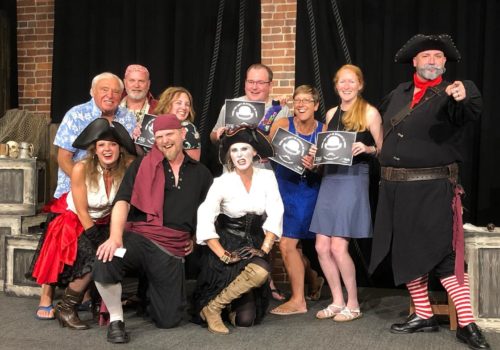
A murder mystery dinner gives your team dinner, theater, and a suspicious number of alibis in one event. Guests question suspects, hunt for clues, make accusations, and laugh at the increasingly questionable logic of their coworkers. It works especially well for holiday parties, milestone celebrations, and groups that want an experience with built-in conversation.
Choose a professionally hosted format when you want the planning off your desk and the energy high from the first clue. Mystery Cafe, America’s original murder mystery dinner theater, can turn a corporate gathering into a case worth cracking without asking your team to become event producers.
2. Put Teams in an Escape Room
Escape rooms are a natural fit for teams that enjoy puzzles and working against the clock. Small groups must communicate clearly, notice details, and decide who is handling the strange lock, the coded message, or the clue everyone somehow walked past twice.
The trade-off is capacity. A physical escape room may require staggered start times for a large organization. A hosted virtual escape room can be a smarter choice for remote or distributed teams, especially when you want everyone playing at once.
3. Run a CSI-Style Investigation
For teams who like the crime-solving part more than the costumes, a CSI-style experience offers a different kind of case. Participants examine evidence, compare theories, and work together to identify what happened. It has the same social spark as a mystery event but can feel more analytical and less theatrical.
This format is particularly good for groups with problem-solvers, detail people, and colleagues who prefer contributing ideas over taking center stage. Everyone gets a role in moving the case forward.
4. Plan a Food Tour With a Mission
A food tour beats a seated dinner when your team wants movement and variety. Instead of one long meal, groups visit several local spots for tastings, drinks, or desserts. Add a scavenger hunt, photo challenge, or trivia question at each stop, and the outing becomes a genuine shared adventure.
Keep accessibility and timing in mind. Choose a walkable area, offer nonalcoholic choices, and avoid making the event hinge on heavy drinking. The best food tours leave people pleasantly full, not stranded at the final stop wondering how to get home.
5. Try an Improv Workshop
Improv can sound terrifying to anyone who hears “perform in front of your coworkers.” A good facilitator knows better. The point is not to find the next comedy star. It is to use short, welcoming exercises that reward listening, quick thinking, and supporting other people’s ideas.
This can be a surprisingly useful option for teams that need to build confidence or collaboration. It is less ideal for a group that has made it clear they want a quiet, low-key gathering. Read the room before making everyone pretend to be a talking stapler.
6. Create a Mini Film Festival
Give small groups a theme, a few simple props, and an hour to make a short video on their phones. The categories can be playful: best detective trailer, worst workplace commercial, most dramatic coffee run, or best use of a mascot.
Screen the results over snacks and let the group vote on lighthearted awards. This activity works because it has room for every kind of contributor. Some people act, some write, some edit, and some become very serious about sound effects.
7. Take the Team on a Bonding Bus Adventure
A bus experience turns travel time into party time. Rather than simply transporting guests from dinner to an activity, a host can lead trivia, games, storytelling, and team challenges along the way. It is a strong choice for a city outing, a multi-stop celebration, or groups that want to see more than one venue.
This option takes more logistical coordination than an in-office activity, but it can feel like a real occasion. For teams in Boston, New York, Providence, or other busy Northeast cities, leaving parking and navigation to someone else is part of the gift.
8. Hold a Team Game Show
A game show brings high energy without demanding that every person be the life of the party. Think custom trivia, survey-style questions, music rounds, rapid-fire challenges, and a host who knows how to keep the pace moving.
Customize a few questions around your company history, harmless inside jokes, or local culture, but do not overdo it. The event should not feel like a surprise compliance quiz. Keep the questions broad enough that new employees and guests can compete fairly.
9. Organize a Creative Build Challenge
Give teams the same improbable supplies and a clear prompt: build a device that protects an egg, create a tabletop parade float, or design a product for an absurdly specific customer. Then let each group pitch its masterpiece to a panel of equally unqualified judges.
Creative challenges are inexpensive, flexible, and easy to run in a conference room. They work best with a host who keeps the instructions simple and the time limits firm. Otherwise, one team will spend 40 minutes debating the structural integrity of a cardboard bridge.
10. Book a Hands-On Class
A cooking class, cocktail-free mixology session, pottery workshop, or paint class gives people something tangible to take away. These activities create natural conversation because everyone is working on the same task, usually with varying levels of success.
Consider dietary needs, physical accessibility, and whether participants will need to travel with what they make. A hands-on class is a solid choice for teams that value a calmer, more conversational kind of fun.
11. Stage a Friendly Field Day
Field day is not just for summer camp alumni. Low-stakes team relays, lawn games, cornhole, giant Jenga, and silly awards can make an outdoor afternoon feel more social than another restaurant reservation.
The crucial word is low-stakes. Avoid activities that reward only speed, strength, or athletic ability. Mix in trivia, puzzle stations, and creative challenges so every team has a way to win something besides a grass stain.
12. Build a Give-Back Event Around Play
A service project can be warm, meaningful, and genuinely fun when it includes a shared goal. Teams might assemble care kits, create cards, pack supplies, or compete to complete donation challenges. Pair it with a meal, music, or a hosted game afterward so the event still feels celebratory.
This approach is especially fitting when your company wants to mark a milestone with purpose. Just make sure the organization and activity align with the team’s interests, rather than treating good intentions as a substitute for good planning.
How to Choose the Right Alternative
Start with the energy level you want. If your group needs a release after a demanding season, choose something lively and hosted, such as a murder mystery, game show, or escape challenge. If people are burned out on screens and deadlines, a food tour, workshop, or field day may be the better call.
Then consider participation style. The strongest events invite people in without putting anyone on the spot. Offer roles for the strategist, the observer, the comedian, the creative thinker, and the person who is mostly there for dessert. A little optionality goes a long way.
Finally, protect the experience with the basics: a clear start and end time, inclusive food and drink options, accessible transportation, and a budget that covers the fun rather than just the venue. When the logistics disappear into the background, your team can focus on the far more pressing question of who had the motive, means, and opportunity.
The right event does not need to turn every coworker into best friends. It simply needs to give them a fresh reason to connect. Pick an activity with a little structure, a lot of room for laughter, and just enough mischief to make the next office conversation more interesting.