
Best Corporate Party Entertainment That Gets Teams Talking
A ballroom full of colleagues politely watching a performer may look like a successful party. But if the only thing guests share afterward is a photo of the dessert table, the entertainment did not do much heavy lifting. The best corporate party entertainment gives people a reason to laugh together, talk to someone outside their usual circle, and leave with a story that is far better than, “The DJ was nice.”
For corporate event planners, that is the real assignment. You are not simply filling 90 minutes between cocktails and closing remarks. You are creating a shared experience for people with different personalities, departments, comfort levels, and ideas of what constitutes fun. No pressure. Just the social fate of the quarterly budget meeting in a nicer venue.
What Makes the Best Corporate Party Entertainment?
Great entertainment is not always the loudest, flashiest, or most expensive option. It is the format that fits your group. A sales team that thrives on friendly competition may want a high-energy game. A mixed group of executives, clients, and partners may prefer an experience with a polished structure and low-pressure participation. A remote team needs more than another grid of faces waiting for someone to unmute.
The strongest choices have three things in common: they are easy to join, they create natural conversation, and they give guests something to do besides watch. Participation does not have to mean pulling someone onstage against their will. It can mean solving clues at the table, casting a vote, answering a challenge, playing a character, or working with a small team toward a common goal.
That difference matters. Passive entertainment can be pleasant. Interactive entertainment turns a party into a memory.
Start with the room, not the trend
Before choosing an act or activity, consider the social reality of the event. How many people are attending? Will guests know one another already? Is the party meant to reward employees, welcome clients, celebrate a milestone, or bring newly merged teams together? These details should shape the entertainment more than whatever happens to be popular on social media.
A quick audience read also prevents common mismatches. A cerebral puzzle experience may be a hit for a detail-oriented team but feel too quiet for a high-energy holiday party. A comedian can land beautifully with a close-knit group but comes with more risk when the audience spans generations, roles, and client relationships. The safest bet is not necessarily the most generic one. It is the one designed to invite people in without making them feel put on the spot.
Corporate Party Entertainment Ideas That Create Connection
There is no single winner for every event. Still, these formats consistently earn their keep because they provide a social spark rather than background noise.
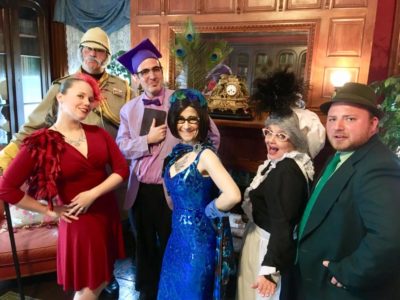
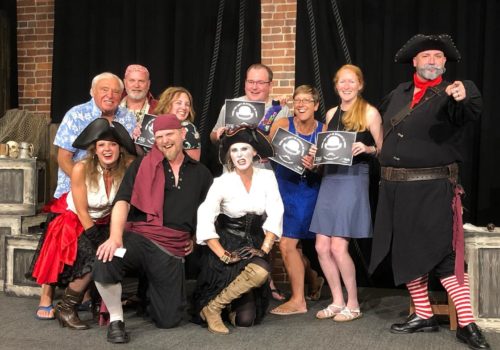
- Interactive murder mystery dinners combine a meal, a live show, clues, suspects, and plenty of playful accusations. Guests can participate at their own pace, whether they want to interrogate a suspicious character or quietly solve the case with their table. It works especially well for holiday parties, client appreciation events, and celebrations where you want a built-in theme without asking everyone to become amateur actors.
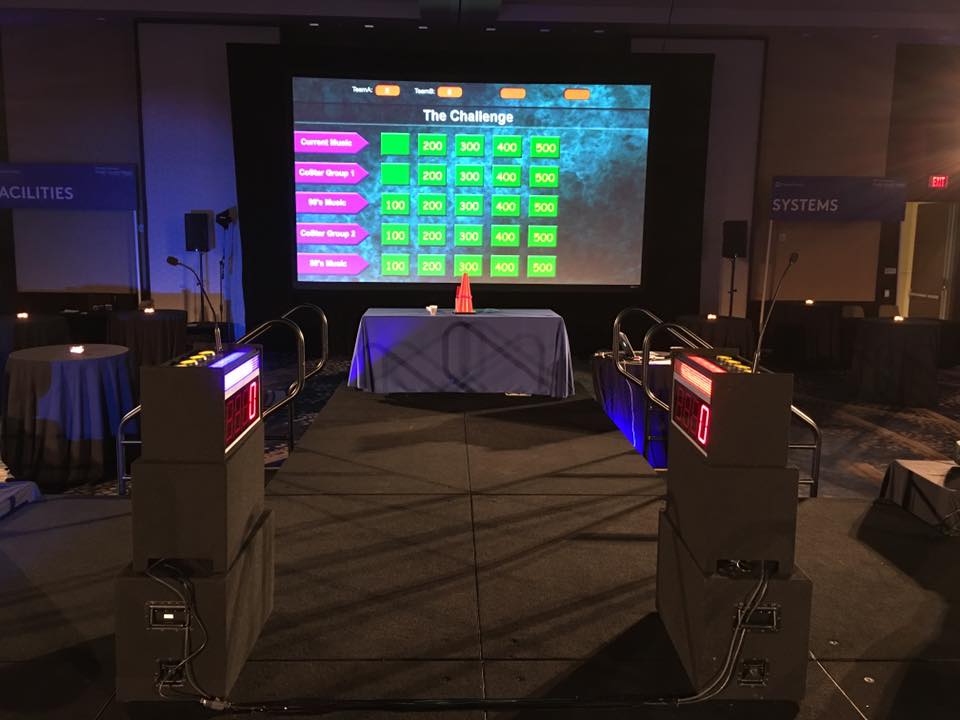
- Team trivia and game-show competitions bring out friendly rivalry in a familiar format. The key is keeping questions broad enough that no one department has an unfair advantage. Mix pop culture, visual rounds, company-safe inside jokes, and collaborative challenges so the event rewards teamwork rather than one person with an alarming amount of knowledge about 1990s sitcoms.
- Escape rooms and puzzle challenges are ideal for groups that enjoy solving, strategizing, and celebrating a hard-won breakthrough. For larger parties, look for a hosted format that lets multiple teams play at once. A standard escape room built for six people is great for a small outing, but it can leave 80 other guests wondering whether they should inspect the coat closet for clues.
- Casino-style nights create an easygoing, drop-in atmosphere. Guests can circulate, learn simple games, and enjoy a little friendly competition without the pressure of a formal tournament. This is a strong choice when attendance times vary or when you want networking to remain the main event.
- Live music paired with an activity works well when the goal is celebration first. A band, dueling pianos, or a skilled DJ can set the mood, but add a shared moment such as a themed challenge, awards, or hosted game to give the crowd an excuse to connect beyond the dance floor.
The common thread is structure. When entertainment gives guests a small mission, a question to answer, or a reason to root for one another, conversation starts faster. That is especially valuable when teams work in separate offices, have recently gone hybrid, or include people who usually communicate through project updates and calendar invites.
Why Murder Mysteries Work for Mixed Corporate Crowds
A murder mystery has a useful superpower: it gives strangers something immediately safe to talk about. Instead of opening with “So, what do you do?” guests can ask, “Where were you when the diamond disappeared?” It is a much better icebreaker, and significantly less likely to lead to a discussion about quarterly reporting.
The format also accommodates different participation styles. The enthusiastic performer can lean into a role. The sharp observer can analyze clues. The person who came mainly for dinner can still enjoy the comedy and vote on the culprit. Nobody has to be the center of attention to feel included.
That flexibility is why a professionally hosted mystery is often a smart choice for diverse groups. The host manages pacing, explains the rules, keeps the energy moving, and makes sure the audience feels part of the show. Mystery Cafe has spent decades making that kind of interactive mischief feel polished, funny, and easy for groups to enjoy.
For in-person events in Boston, New York, Providence, Hartford, and nearby cities, a live mystery can bring the room together quickly. Virtual murder mysteries, CSI experiences, and escape-style games can do the same for distributed teams, without requiring everyone to book a flight or figure out whose turn it is to expense parking.
Match the Format to Your Event Goal
The best choice depends on what success looks like once the party is over. If your goal is employee recognition, entertainment should feel celebratory and inclusive, with enough breathing room for conversation and awards. If the goal is team building, choose an experience that requires small-group collaboration rather than a performance people simply observe.
For client events, favor options with professional facilitation and a refined level of humor. You want guests to relax, not worry that a volunteer segment is about to become a very awkward story for the next board meeting. A mystery, casino night, or sophisticated game show can deliver personality while keeping the experience appropriate.
If the gathering is virtual, be extra selective. A good virtual event has to compete with inboxes, household distractions, and the powerful urge to turn off the camera. Use an activity with clear roles, regular interaction, and a host who can maintain momentum. A passive livestream rarely gets the same results as a case to solve or challenge to complete together.
Plan for Participation Without Forcing It
One of the biggest mistakes in corporate entertainment is treating participation as a volume contest. Not every guest wants a microphone, a costume, or a surprise dance battle. The goal is to create multiple doors into the fun.
Offer optional character roles, table-based gameplay, and team tasks so people can choose their level of involvement. Build in a little time for guests to mingle before and after the main activity. If food and drinks are part of the event, coordinate the schedule carefully. No one should have to solve a crime while their entrée goes cold. That is how a party becomes a true mystery.
It also helps to communicate the experience in advance. A short invitation that explains the theme, expected timing, attire, and participation level makes people more comfortable showing up ready to play. Surprises belong in the plot, not in the logistics.
Give Your Guests a Story Worth Retelling
The best corporate party entertainment does more than occupy a time slot. It gives people a shared reference point after the event: the clue everyone missed, the table that pulled off an unlikely win, the colleague who turned out to be hilariously convincing as a suspect.
Choose the experience that makes your particular group feel welcome, involved, and just a little suspicious of one another. That is usually where the real fun begins.