
Are Hosted Events Customizable? Absolutely.
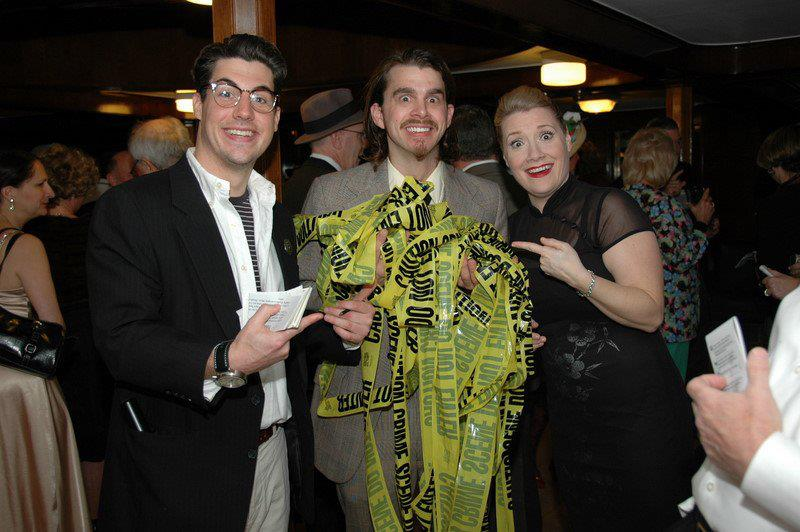
A corporate team that has spent all quarter staring at dashboards does not need another beige banquet room, a polite appetizer, and a speaker with 47 slides. They need a reason to laugh together, make a few bold accusations, and remember why they like working with actual humans. So, are hosted events customizable? Absolutely – and the right choices can turn a routine get-together into the kind of story people bring up long after the culprit has been caught.
For a murder mystery, interactive team-building event, virtual escape room, or hosted celebration, customization is not just about putting a logo on the invitation. It is about shaping the experience around your people, your occasion, and the level of mischief your group is ready to handle.
Are Hosted Events Customizable for Any Group?
Usually, yes. The best hosted events have a proven structure: a host who can guide the action, a clear objective, enough clues or activities to keep everyone involved, and a satisfying finish. Within that structure, there is plenty of room to make the event feel like it was made for your group rather than pulled from the evidence locker.
The amount of customization depends on the format, the group size, the timeline, and how far in advance you book. A fully private murder mystery offers more flexibility than a public ticketed performance, for example. A virtual event can be tailored around team dynamics and company culture, while an at-home DIY mystery gives the host more control over décor, food, and pacing.
The key is to distinguish between meaningful customization and unnecessary complication. A few well-chosen details will make guests feel seen. Trying to rewrite every clue, character, and plot point can turn a party into a production meeting. Nobody wants that kind of crime scene.
What Can You Customize?
The occasion and the audience
Start with why everyone is gathering. Is this an annual company celebration, an employee appreciation event, a client mixer, a milestone birthday, or a reunion of friends who have been waiting for an excuse to dress suspiciously? The purpose helps determine the tone.
A corporate group may want friendly competition and low-pressure participation so new hires, executives, introverts, and natural-born suspects all have a good time. A birthday group may want bigger character energy, inside jokes, and an excuse for the guest of honor to take center stage. A client event may call for polished hosting and easy conversation starters without putting anyone on the spot.
The same mystery format can land very differently depending on the crowd. That is why a good event partner asks about your guests before the first accusation flies.
Theme, setting, and atmosphere
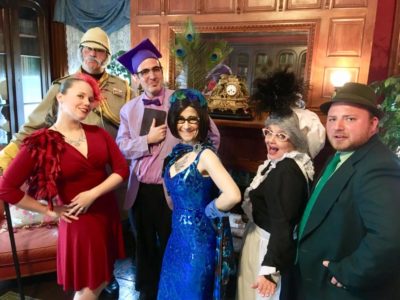
Theme is often the most visible way to personalize an event. You may want old Hollywood glamour, a high-stakes casino night, a holiday caper, a spooky October investigation, or a classic whodunit where every guest has a motive and a questionable alibi.
A theme also affects the room. Table names, playlists, dress suggestions, lighting, menus, and invitations can all reinforce the story without requiring a movie-studio budget. For virtual groups, a themed background, costume prompt, or pre-event package can help guests enter the spirit from wherever they are working.
Choose a theme your guests can participate in comfortably. A costume-forward night may be perfect for a friend group but less appealing to a buttoned-up client audience. The goal is invitation, not intimidation.
Participation level and roles
Not every guest wants to perform a monologue in front of 80 coworkers. Thankfully, interactive does not have to mean embarrassing. Hosted events can be shaped around different comfort levels, from light clue-solving and table discussion to full character participation.
Some groups love assigned roles, playful secrets, and dramatic reveals. Others prefer to work in teams, offer theories from their seats, and let the professional host carry the theatrical weight. Both approaches can create connection. The right choice comes down to your group culture and what success looks like.
If your team includes people who are remote, new to the company, or wary of forced fun, tell your host. A skilled facilitator can keep the energy high while making participation feel natural rather than mandatory.
Company details and personal touches
For private events, relevant details can be woven into the experience with care. A company name on welcome materials, a custom awards category, an anniversary shout-out, or a few work-appropriate references can make an event feel more personal. For social celebrations, you might spotlight the guest of honor, incorporate a favorite hobby, or build the evening around a milestone.
There is a line, though. Personalization should create delight, not discomfort. Skip jokes about sensitive workplace issues, private information, or anything that makes a guest feel like the evening’s unwilling suspect. Keep the humor broad, warm, and just a little bit wicked.
Format, length, and location
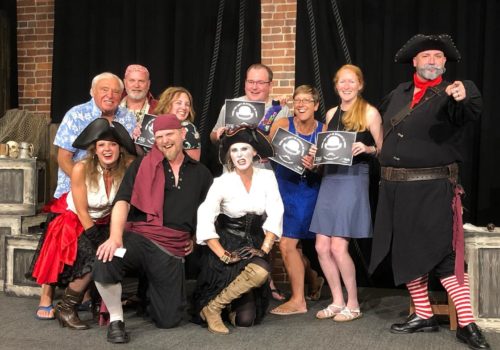
Customization is also practical. A 60-minute virtual CSI experience suits a busy team that needs a lively break between meetings. A full dinner theater experience gives a celebration room to breathe. A bonding bus adventure changes the scenery entirely, while a DIY mystery lets you host on your own turf.
In-person events can fit a restaurant, hotel ballroom, office, private venue, or a space that already has sentimental value for the group. Virtual events can work across time zones when the agenda is planned with care. Mystery Cafe can help groups choose a format that fits the gathering instead of asking the gathering to squeeze into the wrong format.
How to Build a Custom Hosted Event Without Overthinking It
The easiest way to plan is to answer a handful of direct questions before discussing themes or props. Who is attending? What is the occasion? How many people will be there? Where will it happen? How much time do you have? And what do you want people to feel when it is over?
That last question matters most. If you want colleagues to connect, choose a format with collaboration and shared discoveries. If you want a celebration with big laughs, lean into theatrical characters and a festive theme. If your goal is to reward a team after a demanding stretch, favor a professionally hosted experience that requires very little work from the organizer.
Then give your host useful context. Mention the group’s age range, how well people know one another, whether alcohol is part of the plan, any accessibility considerations, and the company culture if it is a work event. A little intel helps the host set the right temperature for the room.
Finally, decide what must be custom and what simply needs to be good. The theme, timing, guest recognition, and participation style may be essential. Rebuilding a proven mystery from scratch probably is not. Let the professionals handle the plot mechanics while you focus on the people in the room.
The Trade-Off: Custom Does Not Always Mean Better
More customization can require more lead time, a larger budget, or added coordination. A custom-written storyline, specialized venue setup, or extensive branded materials may be worthwhile for a major company event, but unnecessary for a 20-person holiday party.
There is also value in choosing a polished, established format. A well-tested murder mystery has pacing, surprises, and audience moments designed to work. The plot has survived plenty of interrogations already. Adding a few personal details to that strong foundation can deliver a more reliable experience than trying to invent a whole new case under deadline.
For planners, the sweet spot is usually selective customization: make the event recognizable as yours, but keep the entertainment in the hands of people who know how to run the room.
Make It Feel Like Your Event
The most memorable hosted events do not depend on extravagant budgets or a mountain of branded props. They make people feel included. A quiet teammate gets drawn into a clue. A manager laughs with the people they usually only see on video calls. Friends who arrived in small clusters end the night trading theories over who had the most suspicious alibi.
Give your guests a setting worth stepping into, a reason to participate, and enough personal detail to say, “This was made for us.” The rest is simple: gather your suspects, trust the host, and let the good times get a little criminal.