
10 Interactive Activities for Sales Kickoffs
The last thing a sales team needs after a long kickoff day is another slide asking them to get excited. They need a reason to lean in, talk to each other, test their instincts, and leave the room with a little momentum in their shoes. The right interactive activities for sales kickoffs turn strategy from a presentation into something reps can practice, debate, remember, and use when the next buyer says, Tell me why I should care.
A great activity is not just a break between sessions. It is a planned moment of participation that reinforces the work ahead: clearer positioning, stronger relationships, better objection handling, or renewed confidence. The trick is choosing experiences that feel like fun without becoming fluff. No one needs a trust fall before lunch. They do need a reason to collaborate beyond their usual territory lines.
Why Interactive Activities for Sales Kickoffs Work
Sales is already a participatory sport. Reps listen for clues, adapt to surprises, make a case, and recover when the conversation takes an unexpected turn. A kickoff should reflect that reality. When people actively solve a problem together, they retain more than they would from a presentation alone, and leaders get a much clearer read on what the team understands.
The social payoff matters, too. New hires can meet veterans without being stuck in awkward small talk. Account executives can hear what customer success teams are seeing. Sales leaders can recognize smart thinking in the moment instead of saving all praise for an awards dinner. A little laughter helps, especially when the team is facing an ambitious number.
That said, not every activity belongs at every kickoff. A competitive game can energize a confident group but may make a team in the middle of a difficult reset feel exposed. Pick the format based on your goals, team size, and time available. The best events give everyone a role, not just the loudest person near the front of the room.
How to Choose Sales Kickoff Activities That Land
Start with one question: What should people be able to do differently when they leave? If the answer is explain a new product story, build an activity around messaging. If it is improve cross-functional collaboration, use mixed teams and a shared challenge. If the goal is simply to bring a distributed team together, prioritize conversation and low-pressure participation.
Keep instructions short and stakes friendly. Teams should understand the mission in a minute or two, then spend their time playing, discussing, and making decisions. A score can add energy, but the real prize is a stronger team. Save the oversized novelty check for the person who can explain the new pricing model without putting everyone to sleep.
10 Interactive Activities for Sales Kickoffs
1. Run a Deal Room Mystery
Give small groups a fictional stalled deal, a buyer profile, email snippets, call notes, and a few suspiciously missing details. Their job is to determine what went wrong and present a recovery plan. Was the champion never truly bought in? Did the team lead with features instead of business value? Did a competitor leave a clue at the scene?
This is an especially effective way to practice discovery and deal strategy without putting a real account under a microscope. Add a facilitator who reveals new evidence midway through, forcing teams to adjust their plan. The format has the energy of a mystery game while keeping the lesson close to the revenue line.
2. Host an Objection Hot Seat
Ask participants to write common buyer objections on cards before the event. A volunteer draws one, gives a first response, then chooses a teammate to improve or expand it. The room votes for the strongest answer based on clarity, empathy, and business relevance.
Keep this moving. The point is not to find one magical script. It is to show the team that objections are conversations, not crime scenes. Leaders can close each round by connecting the best responses to approved messaging, proof points, and customer stories.
3. Try Buyer Persona Speed Dating
Set up tables for key buyer personas, industries, or account types. At each station, one participant plays the buyer and another has three minutes to open a conversation. When the bell rings, sellers rotate, while the buyer stays in character and offers quick feedback.
This activity exposes generic pitches fast. It also gives newer reps a safe place to practice personalization before they are speaking with an actual prospect who has 14 tabs open and exactly seven minutes to spare.
4. Build a Win-Loss Detective Board
Turn recent wins and losses into a visual investigation. Mixed teams review anonymized deal details and map patterns: the trigger event, stakeholder mix, competitive pressure, proof used, timeline, and final result. Then they identify the one behavior that could most improve future outcomes.
Use real data carefully. Strip out names, avoid public blame, and make room for nuance. A lost deal is not always a bad sales effort, just as a closed-won deal is not always a flawless process. The value comes from spotting patterns the team can act on.
5. Create a Territory Treasure Hunt
For an in-person kickoff, build a short, clue-based hunt around the venue. Each stop can reveal a product fact, customer success statistic, competitor insight, or company value. For virtual teams, use breakout rooms and digital clues that lead to a final code.
This works best when each clue requires discussion rather than a quick web search. Keep the route accessible and the pace brisk. Nobody should need hiking boots, a decoder ring, and a waiver to learn the new go-to-market plan.
6. Put Messaging Through an Improv Test
Give pairs a business scenario and a curveball. One person begins a product pitch, while the other introduces a realistic complication: a budget freeze, a skeptical CFO, a competing priority, or a buyer who only wants to discuss implementation. The speaker must adapt without abandoning the core message.
Improv can sound intimidating, so frame it as practice, not performance. Let people pass if they are uncomfortable being in front of the whole room, or run it in small groups. The goal is flexibility and listening, not crowning the office comedian.
7. Solve an Escape Room Together
An escape room gives teams a shared deadline, distinct clues, and a satisfying reason to communicate. It is particularly useful when your sales organization includes people who rarely work together, such as field reps, sales operations, enablement, and leaders from different regions.
Choose a professionally facilitated experience over a pile of random puzzles. The best formats reward different strengths: pattern recognition, communication, organization, and cool-headed decision-making. A virtual CSI case or murder mystery can work just as well for remote and hybrid teams, with no travel logistics to investigate.
8. Stage a Customer Story Showdown
Give each team a customer outcome, then ask them to turn it into a two-minute story for a particular buyer. They need a clear before, turning point, and measurable result. Teams can present live, record a short video, or act out a mock customer conversation.
The room should vote on the story that is most relevant and credible, not the one with the most dramatic sound effects. Afterward, collect the best language. You may walk away with customer stories the entire team can use in calls and follow-ups.
9. Run a Cross-Functional Case Swap
Give salespeople a challenge normally handled by another team, such as an onboarding delay or a campaign handoff. Give customer success, marketing, and operations a sales challenge in return. Each group proposes a solution, then the people who do that work every day explain what they would actually need to make it happen.
This can be funny, humbling, and genuinely useful. It replaces vague requests for alignment with a better understanding of each team’s constraints. Just make sure the debrief stays constructive. The only thing getting interrogated should be the process.
10. End With a Commitment Auction
Close the activity block by giving each person a set number of pretend dollars to bid on the actions they believe will matter most this year. Options might include improving discovery, asking for executive sponsors earlier, sharing call recordings, protecting prospecting time, or involving partners sooner.
The bidding creates conversation, but the follow-through is where it counts. Ask teams to name one action they will own in the first 30 days. Leaders can use the results to reinforce priorities after kickoff instead of letting the energy disappear somewhere between the hotel checkout line and Monday morning.
Make the Fun Serve the Sales Strategy
The strongest kickoff activities connect directly to a message people need to use later. Brief participants on why they are doing the activity, then leave time to debrief what happened. Ask what worked, what surprised them, and how the lesson applies to a customer conversation. Without that reflection, even a terrific game can become a fun story with no business impact.
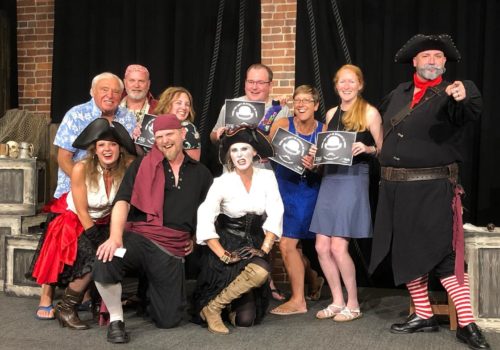
Consider the schedule, too. High-energy activities work well after lunch or at the end of a strategy-heavy session. More thoughtful exercises fit naturally after product training or pipeline reviews. For a full evening event, a hosted interactive mystery experience can give the team a genuine shared memory while still rewarding communication, collaboration, and a healthy instinct to follow the clues.
Your sales kickoff does not need more noise. It needs moments that make people participate, connect, and remember why the plan is worth executing. Give your team a case to crack, a buyer to win over, or a puzzle to solve together, then watch the conversations carry on long after the final clue is found.